
 Iqbal Jakati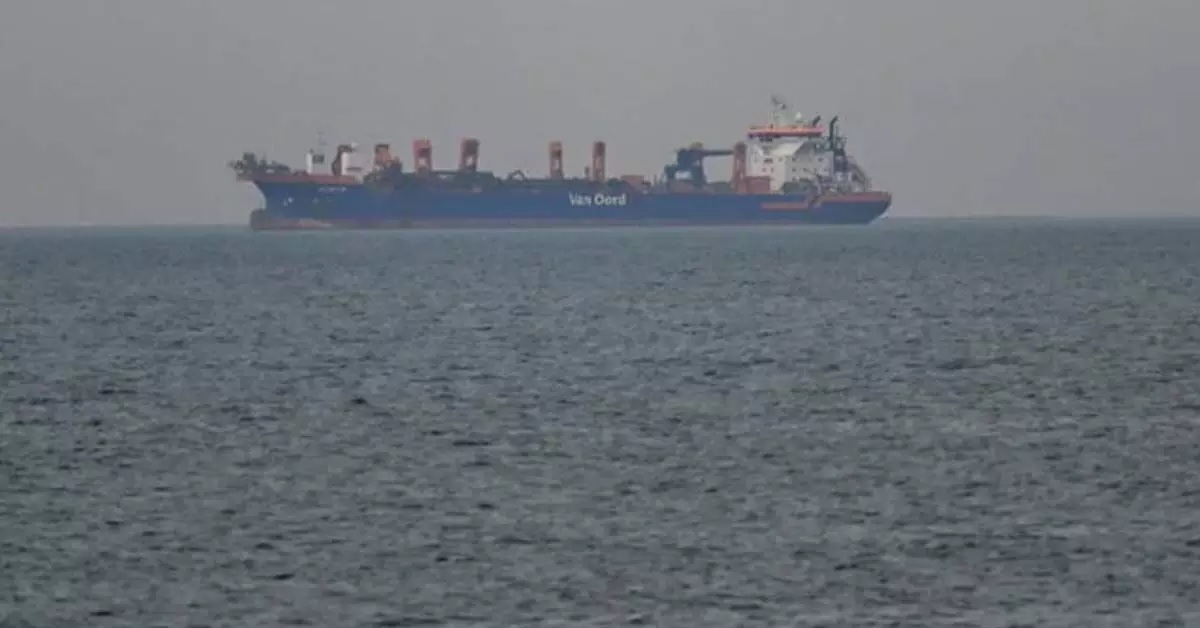
The ongoing military strikes by the United States and Israel on Iran have severely disrupted the flow of oil and gas through the Strait of Hormuz — a critical route for global energy supplies. Following the joint US-Israeli military operation against Iran, Tehran has expanded the conflict by launching retaliatory attacks on Gulf nations hosting American military infrastructure.
On Saturday night, Iran’s Islamic Revolutionary Guard Corps (IRGC) reportedly sent messages to ships claiming that the Strait of Hormuz had been closed. However, no official announcement has been made by Tehran. While it remains unclear whether Iran has formally blocked the strait, many trading firms, insurers, and shipping companies have suspended maritime movements as a precaution. Reports indicate that hundreds of tankers are anchored in Gulf waters.
Any suspension or significant reduction in oil and gas flows through the strait would impact global energy markets, including India, which receives a substantial portion of its oil and gas imports via this route. The longer the disruption continues, the more severe the impact could become. However, experts believe a prolonged closure is unlikely.
India is considered relatively well-positioned to manage short-term supply shocks in crude oil, as alternative supply sources are available. However, the country would still face higher energy costs due to the conflict. The challenge is more serious for LPG and LNG. India is more dependent on the Strait of Hormuz for these gas imports than for crude oil, making adequate supply procurement more difficult and potentially more expensive.
India’s Short-Term Options
The Strait of Hormuz, the world’s most important oil transit chokepoint, is a narrow waterway between Iran and Oman that connects the Persian Gulf to the Gulf of Oman and the Arabian Sea. It handles nearly one-fifth of global liquid petroleum consumption and global LNG trade. Around 15 million barrels of crude oil pass through the strait daily.
Although some Gulf states have pipelines that bypass the strait, their capacity is limited. Even if all alternative routes operate at maximum capacity, nearly 9 million barrels per day could still remain stranded — roughly 9% of global oil demand — unable to reach markets as long as the strait remains closed.
About half of India’s total crude oil imports — approximately 2.5–2.7 million barrels per day — come from countries such as Iraq, Saudi Arabia, the UAE, and Kuwait through this route.
India is the world’s third-largest crude oil consumer and depends on imports for more than 88% of its oil requirements. A significant portion of its gas consumption is also met through imports. Therefore, oil and gas supplies from West Asia are critical for India.
Indian refiners currently hold more than 10 days of crude oil inventories along with about a week’s worth of fuel stocks. To offset any potential import shortfall, India can tap into its strategic petroleum reserves, accelerate procurement from regions outside Hormuz, and secure additional contracts with alternative suppliers.
India could increase imports from Russia, the United States, West Africa, and Latin America. Russian cargoes remain available in the Indian Ocean and Arabian Sea region, and since Indian refiners have recently reduced Russian oil purchases, additional volumes may be accessible.
According to Sumit Ritolia, Lead Research Analyst at Kpler, if Middle Eastern supplies are curtailed, India could turn to Russian crude. While a Hormuz closure may trigger immediate market disruption, a long-term oil crisis is unlikely as India can rely on alternative barrels and nearby supply sources.
However, he noted that India imports 80–85% of its LPG requirements, largely from Gulf suppliers through Hormuz. Unlike crude oil, India does not maintain significant strategic reserves of LPG. Similarly, nearly 60% of India’s LNG imports transit through the strait, and there is limited storage capacity. Although additional crude can be procured relatively quickly, spot availability of LPG and LNG is extremely tight. A prolonged closure would pose a major challenge for securing these fuels.
Rising Oil Prices
As US military action against Iran intensified, global oil markets reacted sharply. A $1 per barrel increase in oil prices could raise India’s annual import bill by $1.8–2 billion.
George Leon, Senior Vice President and Head of Geopolitical Analysis at Rystad Energy, stated that the current disruption may stem from precautionary actions by ship operators and insurers rather than a formal Iranian blockade. However, from a market perspective, the cause is irrelevant. Whether the route is physically blocked or effectively shut due to fear, the outcome is the same.
If the situation persists, countries with reserves may be compelled to release emergency oil supplies. Oil prices could rise significantly at the start of the week, he said. Analysts suggest that in a scenario of prolonged regional conflict and sustained supply disruption, prices could exceed $100 per barrel.
Although Iran has frequently threatened to close the Strait of Hormuz, it has never fully enforced a blockade. Energy and trade experts believe that any closure or obstruction would likely be short-lived.
Gulf oil and gas producers, including Iran, depend heavily on continuous energy exports for revenue. According to Leon, even a temporary closure lasting one to two weeks could create significant disruption. Tanker congestion, cargo rerouting, and port delays may take weeks to normalize, meaning market impacts could persist beyond the formal reopening of the route.
Ritolia added that given the US military presence in the region and the coordinated naval capabilities of Gulf Cooperation Council (GCC) countries, any major disruption is unlikely to last more than a few days.
A complete blockade could also backfire on Tehran, as it risks alienating China — the primary buyer of Iranian oil. It may also violate Oman’s territorial waters, potentially straining relations with a neighboring country that serves as a crucial diplomatic bridge with the United States, experts noted.
Source: Vartha Bharathi (Translated in english)