

 Iqbal Jakati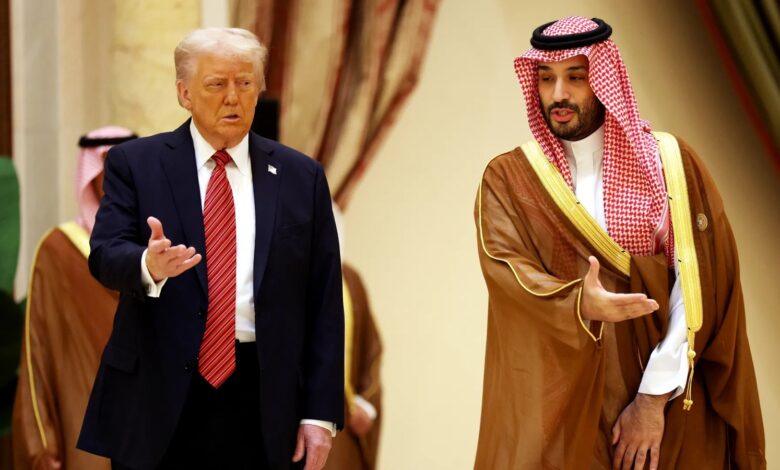
Sources cited by The New York Times say the Crown Prince urged the US President not to pull back, even as Iranian strikes batter the Kingdom’s own oil infrastructure.
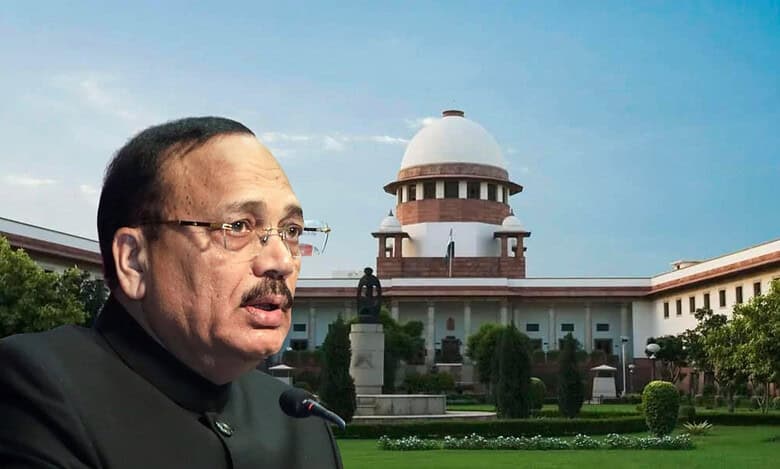
Saudi Arabia’s Crown Prince Mohammed bin Salman has been privately urging Donald Trump to continue the American-Israeli military campaign against Iran, framing the conflict as a “historic opportunity” to reshape West Asia, even as the war inflicts serious damage on his own country’s economy, according to a report by The New York Times.
In a series of conversations over the past week, Mohammed bin Salman, the Kingdom’s de facto ruler, pushed back against any suggestion of winding down the offensive. He argued, according to people briefed by American officials, that Iran’s government poses a permanent threat to the Gulf, one that cannot be managed through diplomacy but only ended through regime change, the NYT report said.
He is said to have gone further, advocating US ground operations inside Iran and a military seizure of Kharg Island, the hub through which most of Iran’s oil exports flow.
Trump has, in recent days, given more serious consideration to such an operation, potentially involving airborne army units or a Marine amphibious assault.
An uncomfortable position
The Saudi stance places Prince Mohammed in an awkward spot. Since the conflict began, Iranian retaliatory strikes have choked off much of the Strait of Hormuz, through which the bulk of Saudi, Emirati and Kuwaiti crude must pass to reach global markets.
Alternative overland pipelines have come under attack too. Iranian drones and missiles have already struck a Saudi refinery and the US Embassy in Riyadh, killing two Bangladeshi migrant workers and injuring more than a dozen others.
Yet, the Crown Prince has reportedly told Trump that the oil market disruption is “only temporary.” American and regional officials are privately sceptical of that assessment, the NYT report said.
The Saudi government rejected the NYT‘s portrayal of Prince Mohammed’s position. “The Kingdom of Saudi Arabia has always supported a peaceful resolution to this conflict, even before it began,” it said in a statement. “Our primary concern today is to defend ourselves from the daily attacks on our people and our civilian infrastructure.”
Why MBS wants this finished, on his terms
Analysts who track Saudi thinking say the Crown Prince’s logic is driven less by appetite for war than by fear of what happens if the US stops short. A partial offensive, in this reading, leaves Saudi Arabia facing a battered but livid Iran, stripped of American protection, with Tehran retaining the ability to periodically shut the strait and hold Gulf energy markets hostage.
“Saudi officials certainly want the war to end, but how it ends matters,” Yasmine Farouk of the International Crisis Group told the NYT.
There is history behind this. The 2019 attack on Saudi oil facilities, attributed to Iran, briefly knocked out half the Kingdom’s production and forced Prince Mohammed to reassess his confrontational posture.
What followed was a slow diplomatic thaw, culminating in the landmark 2023 Saudi-Iran rapprochement brokered by China. That opening is now in ruins. “What little trust there was before has completely been shattered,” Saudi Foreign Minister Prince Faisal bin Farhan said last week.
A personal stake
The war also threatens Mohammed bin Salman’s defining domestic project. Vision 2030, his ambitious plan to wean the kingdom off oil dependence and turn it into a global business and tourism destination, was already under strain before the first missile flew. Budget deficits are forecast for years ahead, and vast spending on megaprojects and artificial intelligence (AI) has stretched the country’s finances.
The entire venture depends on projecting stability to foreign investors. A prolonged conflict makes that nearly impossible.
However, Trump has been hot and cold on this. On Monday, March 23, the US President claimed on social media that his administration and Iran had held “productive conversations” toward a “complete and total resolution” of hostilities. Iran denied any such negotiations were underway.
The White House declined to comment on Trump’s private discussions with foreign leaders.
Source: Siasat Daily