
 Iqbal Jakati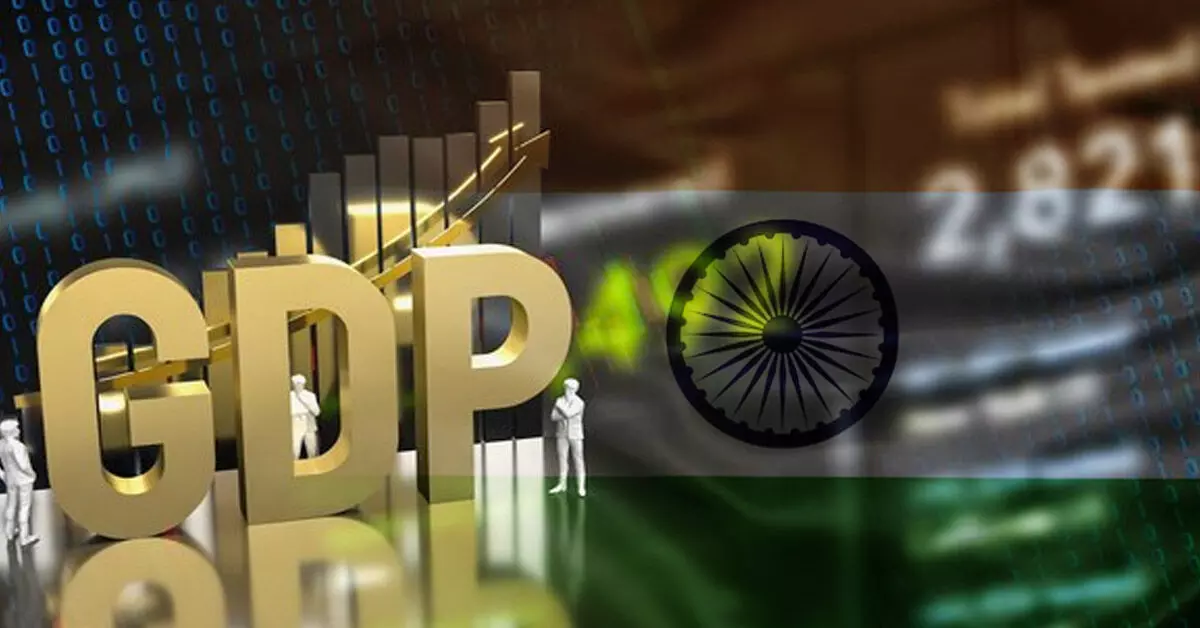
Why Has India’s GDP Ranking Slipped? Here’s What You Need to Know
New Delhi: According to the latest World Economic Outlook estimates by the International Monetary Fund (IMF), India has slipped out of the top five global economies in terms of nominal GDP.
However, this decline is largely attributed to currency fluctuations rather than any fundamental economic weakness. Projections suggest that India could regain its lost position in the coming years, as reported by India Today.
Currently, India stands as the sixth-largest economy in the world based on nominal GDP. As per recent estimates, the United States (over $30 trillion) leads, followed by China (around $19–20 trillion), Germany (around $5 trillion), and Japan and the United Kingdom (each between $4–4.5 trillion). India, with slightly over $4 trillion, has moved to the sixth position.
Why Did India’s Ranking Fall?
Global GDP rankings are measured in US dollars, making exchange rates a critical factor. Even if domestic production remains unchanged, a weakening rupee reduces the size of India’s economy in dollar terms. Over the past year, the rupee has depreciated from around 84–85 per dollar to over 90, lowering India’s nominal GDP value in dollar terms and impacting its ranking.
Since India, Japan, and the UK are all in the $4–5 trillion range, even minor currency fluctuations can alter rankings.
Key Factors Putting Pressure on the Rupee
- Rising crude oil prices: Due to geopolitical tensions in West Asia, oil prices have surged. India imports nearly 90% of its crude oil, increasing dollar demand and pressuring the rupee.
- Foreign investment outflows: Global uncertainties have led foreign investors to withdraw funds from Indian markets, weakening the currency further.
- Trade deficit: High imports of oil, electronics, and gold continue to widen India’s trade deficit, increasing demand for foreign currency.
- Dependence on capital inflows: India relies on foreign capital, which tends to become volatile during global economic stress.
The Economic Survey has noted that the rupee is currently undervalued compared to its real potential, reflecting the gap between strong domestic growth and external economic pressures.
Source: Vartha Bharathi (Translated in english)