 Iqbal Jakati
The Islamic World and Indian Muslims
There is no doubt that the situation in the country is currently very troubling, especially in states where the Bharatiya Janata Party (BJP) is in power. In these states, Muslims are not being allowed to live with dignity in any sphere of life. When they go to do business, they are asked to display their names and religion on their shops so that their businesses can be silently boycotted. They are not permitted to construct new mosques, even in areas where Muslims are in the majority and even when the land belongs to them. Graveyards are not allowed to expand beyond their existing limits, even if they are completely full.
Records of existing mosques are being scrutinised, and if they are found to extend beyond old boundaries, they are demolished, or attempts are made to occupy them by claiming that a temple once existed there. Many mosques have been brought under suspicion. Hanuman Chalisa is played in front of mosques, and rallies and processions are deliberately taken through Muslim neighbourhoods. Even in the field of education, Muslims are now being prevented from progressing. A recent example is a medical college in Kashmir that was shut down solely because Muslim students secured a large number of admissions and achieved top ranks with better marks.
Advani’s Rath Yatra: The Peak of Communalism
During Rajiv Gandhi’s government, L.K. Advani launched the Rath Yatra. Under the slogan of Babri Masjid–Ram Mandir, he mobilised Hindu communities across the country and travelled from one end of India to the other. One fire was used to ignite another, with fuel continuously added to it. It was in this fire that the BJP rose to prominence, a credit that largely goes to Advani.
When Narendra Modi assumed office in 2014, it became clear that playing the communal card was considered essential to rule the country. At every place, on every platform, and in every speech, minorities were targeted. Gradually, the 80 per cent Hindu population was consolidated, and many were quietly radicalised—distanced from minorities who had previously remained outside this fire.
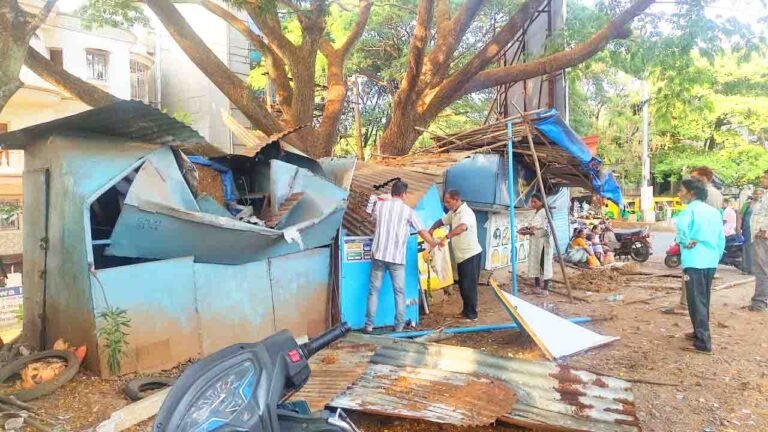
Out of this 80 per cent, at least 70 per cent remain silent. However, through media, films and social media, the BJP and its allied organisations such as the Bajrang Dal have pushed them further away from minorities. They may not raise their voices, but mistrust has been created. This is not limited to Muslims alone; Christians and, to some extent, Buddhists and Sikhs are also affected. The police, administration and even institutions of justice have not remained untouched. Arbitrary arrests and the use of bulldozers have become routine.
Our Present Condition
At the same time, Indian Muslims are becoming increasingly disconnected from their own surroundings and realities. They tend to avert their eyes from incidents affecting Muslims within the country, while finding comfort in news of Muslim success elsewhere in the world—particularly in Europe and the West. Reports of Muslim mayors in cities such as New York, London, Birmingham, Leeds, Blackburn, Sheffield, Oxford, Luton, Oldham and Rochdale, or the acceptance of halal meat, bring a sense of happiness.
They also feel encouraged by reading what Western thinkers and intellectuals have said about Islam, frequently quoting figures such as Tolstoy, Bernard Shaw and Bertrand Russell. However, the real need is to study the lives of Muslims who have risen to high positions in Europe and America, and to understand the circumstances through which they reached there.
Many of them arrived as refugees from Asia and Africa, enduring immense hardship—travelling in small boats, facing storms and rough seas, hungry and thirsty, leaving behind their villages, families and ancestors, losing everything along the way. Some even travelled clinging to planks after their boats broke apart. We have seen many such people in the West, met them, and heard their painful stories.
The Western World and Muslims
The Western world is the same world that ruled much of the Islamic world for over 200 years and still remains a global superpower. It is largely a white-dominated world where hostility towards Islam is common. Refugees were not welcomed without reason. These people crossed seas, deserts and forests, facing every possible hardship.
They held firmly to Islamic values and presented the true image of Islam—promoting honesty, brotherhood, social service and high moral standards; staying away from alcohol and immorality; emphasising respect for women; upholding Islamic democratic values; and sincerely respecting the laws of the land. Only then did they gradually progress and find a place in people’s hearts. Understanding their real stories is extremely important. Progress in the world does not come overnight.
Raising Our Voice in the Present Situation
In contrast, our condition today resembles living in self-delusion. We pass time by repeating stories of Muslims in Arab countries and Europe, remaining disconnected from our own environment—unfamiliar with our neighbours, distant from their language, culture and traditions, extending no hand of friendship, and living isolated in our own world.
Before us is the complete life of the Prophet Muhammad (peace be upon him), the examples of the Companions, and the illuminating guidance of the Qur’an. We should not place our hopes in Arab nations that often do not even recognise Indian Muslims as Muslims. If our lives are to improve, it will only be by wholeheartedly adopting the highest values of Islam.
If we deal with our Hindu brothers with love, fraternity and noble character, and take a few steps forward to engage with them, these silent Hindus will become our voice. We must build bridges of love, create pathways of friendship and brotherhood. We must stand united, not divided. This is the highest call of Islamic ethics in the present circumstances.
By: Munir Ahmed, Tumakuru
The views expressed are those of the author, and the organisation does not necessarily agree with them.
Source: Haqeeqat Time (Translated in english)